Rule The Globe Land Customization Guide
Use patterns, crowns, and flags for identity while keeping the map readable in chaotic wars.
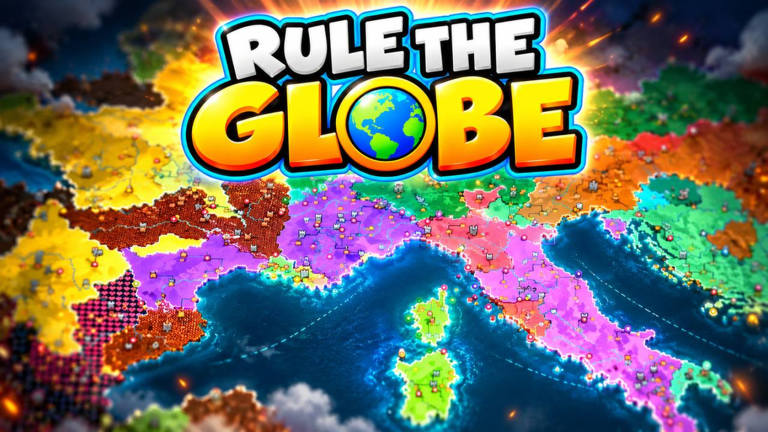
Land customization in Rule The Globe lets you mark your empire with patterns, crowns, and flags. These cosmetics do not replace troops, ships, or nukes, but they change how quickly humans read the map. In a twenty-player conquest lobby, readability is a real advantage. This guide explains what the cosmetic systems are for, how to choose looks that help allies and confuse fewer teammates, and when to stop fiddling with style during a live war.
Open the customization entry from your land or HUD as described on Controls. Set a look early, then return to claiming. If you still need the opener checklist, use Getting Started.
Cosmetics versus power
Patterns, crowns, and flags are identity layers on top of ownership color and borders. They help players recognize your blob at a glance, brand a coalition aesthetic, or simply enjoy the sandbox fantasy of ruling a styled nation. They do not harden tiles, spawn free armies, or block nukes.
That distinction matters because new players sometimes spend the first minutes in the cosmetic menu while neighbors vacuum empty land. Treat customization like jersey selection before a match: important for recognition, irrelevant as a substitute for practice. Win conditions still run through expansion, diplomacy, and pressure tools covered across the guides hub.
Patterns: silhouette and noise
Patterns change the surface read of your territory. Busy patterns can look striking in screenshots and muddy during fast border fights. Cleaner patterns usually help you and your allies track where your empire ends under zoom and motion blur.
Choose patterns with a job. High-contrast, simple repeats are good for chaotic public lobbies. Intricate patterns are fine for chill servers or content recording where recognition speed matters less. If two allies pick near-identical busy patterns, mid-fight misclicks become more likely. Coordinate just enough to stay distinct.
When evaluating a pattern, zoom out until your empire is a small shape. If you can still tell it apart from neighbors, the pattern passes. If everything melts into visual static, simplify.
Crowns: leadership markers
Crowns are status flourishes. They sell the fantasy of a capital presence and make your nation feel authored. Use them as a recognition pin, especially if several players share similar base colors in a messy lobby.
Do not confuse a crown with safety. A crowned overextended snake border still dies to basic Attack pressure. If you like crowns for style, apply them after your first contiguous foothold exists so you are not decorating a one-tile failure.
In diplomacy, crowns can become shorthand in chat (“push the crown south”), which is useful during coordinated wars. Keep that shorthand accurate. If you re-style mid-match into something unrecognizable, tell allies once so they do not Attack the wrong blob.
Flags: signal and storytelling
Flags give your land a banner-level identity. They are excellent for content, friend groups, and long matches where people need a stable mental label for your nation. They also help when explaining a betrayal plan: naming a flag is faster than describing a coastline.
Pick flags that remain readable at reduced size. Extremely detailed flags can vanish into pixel noise on mobile. If you play primarily on touch devices, favor bold shapes. PC players with large monitors have more room for complexity, but clarity still wins in multi-front wars.
Flags can imply allegiance. Matching flags inside a coalition looks organized and can intimidate lonely neighbors. Matching flags can also broadcast your pact to the entire lobby, which is not always desirable. Sometimes a quiet, distinct identity is better operational security than a friend-group uniform.
Map reads: the hidden skill
Customization should improve map reads, not sabotage them. Map reading means tracking who owns what, where the thin borders are, which coast is unprotected, and which ally stack is actually yours. Anything that slows that process costs troops later.
Practical readability rules:
- Stay distinct from your most likely enemies and allies.
- Avoid swapping styles every minute during active fighting.
- Prefer contrast that survives zoom-out.
- Use cosmetics as labels in callouts, then verify on the border before Attack.
- Recheck your look after rejoining or after major UI changes so you still recognize yourself.
If a teammate keeps attacking you by mistake, the fix might be cosmetic contrast rather than another angry chat paragraph.
When to customize during a match
Best times: lobby start, after securing a compact core, during a frozen allied border, or right after a quiet consolidation phase. Worst times: while a beachhead is landing, while a nuke confirm is open, or while your last reserve is racing to a collapsing edge.
A thirty-second style pass at the right time can help for the next twenty minutes. A thirty-second style pass at the wrong time can lose the coast that mattered. Naval and nuclear crises especially punish menu tourism—see Ships and Naval and the Nukes Guide for the fights you should not AFK.
Identity, alliances, and betrayal
Cosmetics become part of diplomatic memory. Players remember the skull pattern that betrayed them, the crown that hard-carried a coalition, or the flag that always nukes first. That memory can help or hurt inside a single long lobby and across repeat servers with familiar names.
If you plan a betrayal, understand that a unique look makes you trackable before and after the break. That is usually fine; stealth cosmetics are less important than stack position. Still, do not rely on a last-second recolor as a strategy. Borders and troops reveal you. Read Alliances and Diplomacy for the real timing work.
Suggested starter setups
For serious public ladders of attention: simple pattern, clear crown accent, bold flag, high contrast against common neighbor colors. For friend-group roleplay: coordinated flags with still-distinct patterns so you can tell members apart. For content recording: a signature look you reuse so viewers learn your silhouette.
Whatever you pick, write one sentence of purpose: “This setup is for fast ally recognition on mobile.” If you cannot state the purpose, you are probably only shopping.
Closing reminder
Patterns, crowns, and flags are how Rule The Globe lets empires feel personal. Use them to make the map legible and the fantasy fun. Then close the menu and return to the systems that crown winners: disciplined expansion, coastal awareness, timed diplomacy, and pressure tools aimed at conversion. Style is the jersey. The match is still decided on the globe.
Frequently Asked Questions
Quick answers for Rule The Globe players.
Do patterns, crowns, or flags give combat power?
No. They are cosmetic identity tools. Troops, ships, nukes, and diplomacy decide fights.
What customization is best for competitive lobbies?
Simple, high-contrast patterns and bold flags that stay readable when zoomed out, especially on mobile.
Should allies match cosmetics?
Matching flags can show unity, but keep patterns distinct enough that teammates do not Attack each other by mistake.
When should I open the customization menu?
At the start or during safe consolidation—not during landings, nuke confirms, or collapsing borders.
Can cosmetics help diplomacy?
Yes as recognition labels in callouts and memory, but trust still comes from border behavior, not from matching styles.